
DestList DFY Travel Planning System
DestList was built to solve a problem I felt personally: loving travel, but hating how much work planning a trip had bec...

Jam SQL Studio
A significant shift in the SQL IDE landscape materialized when Microsoft retired Azure Data Studio in February 2026, cre...

Pyzit Disposable Email Detector
We built Pyzit to solve the problem of fake signups and bot registrations plaguing online platforms. Our disposable emai...
Recently Listed
114 launches
Featured
A significant shift in the SQL IDE landscape materialized when Microsoft retired Azure Data Studio in February 2026, creating an immediate need for a robust alternative. Jam SQL Studio has positioned itself directly into this market gap, offering a modern SQL development environment purpose-built for an AI-first workflow rather than as a retrofitted legacy tool. What distinguishes this product from traditional SQL IDEs is its native integration with AI agents through the Model Context Protocol (MCP) framework, combined with an embedded Claude Code CLI. For database engineers and DevOps professionals who increasingly rely on AI-powered coding assistance, this foundation represents a meaningful departure from competitors still bolting on AI as an afterthought. The product supports an impressively broad database ecosystem—SQL Server, PostgreSQL, MySQL, MariaDB, Oracle, and SQLite—making it genuinely cross-platform in capability. The feature set covers core IDE expectations: SQL notebooks with .ipynb compatibility, intelligent code completion, visual execution plan analysis, built-in charting, and schema comparison. Beyond these fundamentals, Jam SQL Studio includes DBA-focused tooling like session management and performance monitoring across multiple database engines. For teams transitioning from Azure Data Studio, the migration path is straightforward since existing query files, notebooks, and credentials transfer directly. The pricing model emphasizes accessibility. The tool is free for personal use with no registration requirement, which is particularly significant for developers evaluating alternatives or maintaining home lab environments. This freemium approach removes friction from adoption and creates a clear upgrade path for organizations needing advanced capabilities. Where the product strategy becomes clear is in its timing and positioning. Rather than competing head-to-head on feature parity with established tools like DataGrip or DBeaver, Jam SQL Studio has recognized an underserved segment: developers who need SQL IDE functionality integrated with modern AI-agent development workflows. The MCP support and Claude integration specifically target this audience, while maintaining compatibility with traditional SQL development for those who don't need AI-enhanced features. The main question for potential adopters is whether a relatively new entrant can maintain feature parity across such a broad database support matrix while simultaneously developing its AI capabilities. Nevertheless, by capturing users displaced from Azure Data Studio's retirement, Jam SQL Studio has secured an initial user base with genuine switching motivation rather than relying purely on feature advantages.
Featured
We built Pyzit to solve the problem of fake signups and bot registrations plaguing online platforms. Our disposable email detection API instantly identifies temporary email addresses, protecting your platform from fraudulent users while improving data quality. It's fast, reliable, and completely free to get started.
Featured
DestList was built to solve a problem I felt personally: loving travel, but hating how much work planning a trip had become. What should feel exciting often turns into hours of comparing flights, checking hotel reviews, mapping locations, building an itinerary, and second-guessing every decision. Even with all the information online and the rise of AI tools, travellers are still left doing the hardest part themselves: turning scattered options into one trip that actually makes sense. That is the problem DestList solves. What makes DestList different is our hybrid approach: AI plus human-in-the-loop travel curation. AI helps us move faster by organizing options, structuring itineraries, and handling research at scale, but we do not stop there. Human review is what makes the plan feel grounded, intentional, and trustworthy. That combination helps us deliver travel plans that are not just generated, but actually curated. DestList turns a traveler’s preferences, budget, and style into a structured, ready-to-book trip. Instead of endless tabs and fragmented decisions, users get curated flights, hotels, day-by-day itineraries, mapped routes, and planning support in one place. I built it because I believe travel planning should start with intention, not logistics. The goal is not just to give people more options, but to remove the mental load of planning and replace it with clarity, confidence, and a better travel experience.

In a rapidly changing world where environmental concerns are increasingly pressing, Click to Save the World emerges as a novel solution for everyday individuals seeking to make a tangible impact. By harnessing the power of click-based fundraising, this platform empowers users to contribute to various eco-friendly initiatives and charitable causes with minimal effort. What stands out about Click to Save the World is its straightforward, user-friendly approach. The website's design is intuitive, guiding users through a simple process that encourages engagement and sustained participation. This ease of use is a significant strength, as it helps overcome common barriers to online activism, such as feeling overwhelmed or uncertain about where to start. Key features worth noting include the platform's curated selection of reputable organizations focused on environmental conservation and social welfare. Click to Save the World's partnerships with established charities and advocacy groups ensure that users' contributions are invested in meaningful initiatives. Additionally, the platform's gamification elements – including rewards and leaderboards – provide a sense of accomplishment and community engagement. The pricing model for Click to Save the World is straightforward: there are no upfront costs or subscription fees required. Users can contribute as much or as little as they wish, making it accessible to everyone, regardless of financial means. This inclusive approach reflects the platform's commitment to democratizing the power to create positive change.

Data Entry is a big topic in every workflow :) So, I decided to automate the whole process. The tool is not waiting for you to spoon-feed it, it can parse texts by its own. Do you know that if you use many cloud AI tools you might be in danger of real legal issues ?! This is applied for most countries. You cannot send the data of a customer somewhere to be processed and then sent back to you (basic GDPR). Here comes TextsBert > Full Local, no could AI, no need even for Internet connection. Fully ready to be edited by your IT team or any expert. Saved Profiles supporting identites, Snippets and text expansion, team collaboration and optional sync (E2E), and more in TextsBert. Test it, it is free. No more "I spend hours filling forms for customers" execuses.

Streaming radio has fragmented across platforms, making it difficult for listeners to find quality broadcasts without subscribing to multiple services or downloading individual station apps. RadaRadio addresses this by functioning as a unified directory and player for radio stations and podcasts, aggregating content from over 150 countries into a single browsable catalog. The platform positions itself for radio enthusiasts seeking serendipitous discovery rather than just their favorite stations. This distinction shows in the product's design choices. Beyond the expected search and station browsing, RadaRadio offers a "I'm Feeling Lucky" feature that surfaces random stations, encouraging spontaneous exploration. The interface organizes content through multiple discovery paths simultaneously: by genre (Pop, Rock, Classical, News & Sports), by decade (20s through 90s), and by geography. Users can drill into local stations in specific cities like Montreal and Vancouver, or explore radio across an entire country. The geographic breadth distinguishes RadaRadio from competitors. The homepage lists nearly 200 countries, from obvious markets like the United States (9,698 stations) and France (2,777 stations) to niche territories with just one or two stations listed. This comprehensive coverage suggests the team indexed radio broadly rather than focusing on a single region or language market. Canada alone represents 1,533 stations, indicating particular depth in the home market. RadaRadio integrates podcasts alongside live radio, positioning itself as a broader audio streaming alternative to Spotify or Apple Music for listeners who value radio's format. The platform includes major podcast networks—NPR, NBC News, Barstool Sports—signaling an attempt to compete on audio content variety, not just breadth of radio stations. The product avoids the freemium complexity that plagues many streaming services. No pricing model is mentioned on the homepage, suggesting either a fully free service or a deliberate choice to hide monetization from first-time visitors. This approach lowers friction for trial but raises questions about sustainability. RadaRadio appeals to a specific audience: radio listeners who have grown frustrated with the death of local radio in their markets, expats seeking home country broadcasts, and audio enthusiasts who view radio as culturally distinct from algorithmic playlists. For travelers, the ability to stream local radio from any country creates genuine utility that generic music services cannot replicate. The platform's core limitation is execution clarity. A scraped homepage shows features but not user experience; without testing the product, it remains unclear whether the 1,518 stations stream reliably or whether the interface actually delivers the discovery promise the design suggests.

Launch faster with DMCA Ignored Hosting on private Netherlands infrastructure. Trusted by 12,000+ users for secure, high-performance offshore VPS. We Provide Servers for -> Adult Website DMCA Ignored Content Copy content Movie site Casino Site etc

Combining the timeless appeal of tic tac toe with the spectacle of mixed martial arts, this online game targets casual and competitive players seeking lighthearted multiplayer entertainment with a thematic twist. The intersection of simple strategy gaming and fighting culture creates a niche entry point for players who might otherwise overlook traditional board game adaptations. The product distinguishes itself through an uncompromising free-to-play model. Rather than relying on advertisements or pay-to-win mechanics—common pitfalls for browser-based games—MMA XOX commits to no monetization friction. This approach lowers barriers to entry and suggests confidence in user retention through engagement alone. The decision to eliminate ads and competitive purchasing options directly addresses widespread frustration with gaming platforms that prioritize revenue over player experience. What truly sets this offering apart is its ambition toward globalization. Supporting 17 languages including Turkish, Arabic, and Mandarin Chinese signals genuine international reach, not merely English-language gaming with translation buttons. This breadth hints at a development team or publisher thinking beyond English-speaking markets from the outset. The commitment to cross-platform compatibility and mobile responsiveness ensures players access the game regardless of device, a practical necessity in markets where smartphone-first internet usage dominates. The competitive infrastructure reveals sophisticated design expectations. Ranked matchmaking systems paired with global leaderboards transform what could be a throwaway browser game into a persistence layer where player progression matters. The inclusion of seasonal tournaments and private room creation for friends suggests the developers understand that casual games thrive when they balance frictionless pickup play with goals for committed players. Fighter characters allegedly feature unique abilities, implying strategic depth beyond traditional tic tac toe's mathematical exhaustion. The social features—friends systems, private lobbies, and global matchmaking—position this as community-oriented rather than solitary. This architecture benefits both retention and word-of-mouth growth, assuming the execution matches the design intent. The requirement that JavaScript be enabled is unsurprising for real-time multiplayer but worth noting for accessibility considerations. The core tension in the pitch is whether thematic wrapping around tic tac toe generates sufficient novelty to sustain a competitive gaming community. The infrastructure supports such ambitions, but success depends entirely on execution quality and marketing reach—factors the website text cannot reveal. For players tired of monetization dark patterns, the straightforward free model alone warrants investigation.

Software licensing remains an expensive barrier for individuals and small organizations, particularly when purchasing Windows and Office products at full retail rates. PRISE KEYS addresses this pain point by offering discounted license keys with same-day activation, targeting budget-conscious users and businesses seeking to reduce their software procurement costs. The core value proposition centers on cost reduction and speed. By marketing itself as a low-cost alternative to traditional retail channels, the service positions itself against both Microsoft's standard pricing and unauthorized resellers, presumably through legitimate discount acquisition or volume purchasing. The emphasis on instant delivery suggests a streamlined fulfillment process that addresses a common frustration in the key resale market—waiting days for license activation after purchase. The product operates in the well-established grey market for software licensing. This sector exists in the space between authorized retailers and counterfeit operations, relying on legitimate stock sourced through various channels including corporate bulk licenses, regional discounting, or liquidation of unused corporate assets. Customers accept modest legal and warranty tradeoffs in exchange for substantial savings on Microsoft's products. What distinguishes PRISE KEYS from competitors in this category remains unclear from the available positioning alone. The market includes dozens of similar resellers, all claiming affordability and speed. Without additional differentiation details—such as specific product availability, warranty coverage, customer support responsiveness, or price guarantees—the service depends primarily on its ability to undercut rivals on both cost and delivery time. The business model involves narrow margins compensated by volume, typical of discount licensing resellers. This structure raises long-term sustainability questions, particularly given Microsoft's ongoing crackdown on unauthorized key resellers and its shift toward subscription models like Microsoft 365, which becomes increasingly difficult to discount. For potential customers, the appeal is straightforward: immediate access to Windows and Office at substantially reduced prices without extended purchasing processes. However, the trade-offs deserve consideration. Licenses purchased through discount channels often lack manufacturer support, may carry usage restrictions, and could face deactivation if Microsoft identifies them as non-compliant with resale policies. Users accepting these risks will likely find value in the cost savings and delivery speed. Those requiring warranty coverage, technical support, or legal certainty over their software purchases should stick with authorized channels despite higher costs.

For investors juggling multiple information streams across equities and digital assets, staying informed requires monitoring diverse news sources and market data throughout the day. Meyka addresses this fragmentation by consolidating real-time financial news and market updates in a single interface powered by AI technology. The platform targets active traders and investors who need timely market intelligence to inform trading decisions and portfolio adjustments. The core value proposition centers on AI-driven news aggregation combined with a conversational stock screener. Rather than passively consuming headlines, users can query the system directly through an AI chat interface to filter and analyze stocks based on their criteria and interests. This represents a shift from traditional news consumption toward a more interactive, on-demand approach to market intelligence. The platform appears to track a broad spectrum of assets—from major technology stocks and semiconductor companies to cryptocurrencies like Bitcoin and international markets—delivering coverage that reflects both macro trends and individual security movements. What distinguishes Meyka is the integration of natural language interaction into financial research. Users aren't limited to scrolling feeds; they can ask the AI screener questions about market conditions, sector performance, or specific assets and receive contextual responses. This approach acknowledges that investors have different information needs minute to minute and benefit from a system that adapts to their queries rather than forcing them through rigid category filters. The platform leverages real-time data, evident from headlines covering breaking developments like geopolitical tensions affecting oil prices, earnings announcements, and M&A activity. This emphasis on immediacy matters for a user base where news timing can meaningfully impact position decisions. The combination of breadth (stocks, crypto, commodities context) with depth (the ability to drill down through AI-assisted screening) positions the tool for traders managing diversified portfolios. Without explicit pricing details in the available materials, the business model remains opaque, though AI chat features increasingly signal premium-tier monetization in the fintech space. The product's reliance on proprietary news aggregation and data infrastructure suggests potential subscription-based revenue, though this remains speculation. Meyka tackles a legitimate pain point in modern investing: information overload. By automating news curation and embedding conversational analysis, it streamlines what would otherwise require tabs across multiple financial sites and news outlets.

Modern gift registries have long operated under restrictive assumptions: registrants are limited to select retailers, guests must navigate clunky interfaces, and the entire experience feels trapped in early-2000s e-commerce. GiftPlan challenges this model by letting people curate gifts from virtually any online retailer while accepting flexible monetary contributions, addressing a real gap in how we approach gift-giving for major life events. The platform targets anyone planning a milestone celebration—weddings, baby showers, housewarmings, birthdays, graduations—essentially any occasion where guests need guidance on what to give. What distinguishes it from legacy registries is its straightforward flexibility. Rather than forcing users to shop from affiliated stores, the service lets them paste product links from Amazon, John Lewis, Selfridges, or elsewhere, with the system automatically pulling in product photos, prices, and descriptions. This removes friction for both the person building the registry and those browsing it. Beyond simple product import, GiftPlan includes meaningful features that acknowledge how people actually give gifts today. Group gifting allows multiple guests to contribute toward higher-ticket items, solving the tension between dreaming big and budget constraints. The thank-you manager automates gift tracking and personalizes acknowledgment notes, a practical feature that addresses the genuine headache of managing dozens of thank-you correspondences after an event. Guests contribute via Stripe without needing to create accounts, and they can include personal messages alongside their gifts—small touches that transform a transaction into something more human. The pricing structure reflects pragmatism over extraction. A one-time $9 publication fee and 1.5% per contribution (with guests able to voluntarily cover Stripe processing fees) represents a lean take compared to subscription-based competitors. The company explicitly promises no monthly costs and no hidden fees, which, while table stakes for a modern service, stands as a deliberate positioning choice. Where GiftPlan succeeds most is in removing friction without oversimplifying. The guest experience requires no app download, no account creation, and little decision-making beyond picking a gift and payment amount. For registrants, the universal import capability genuinely accelerates setup. The design philosophy appears oriented toward getting people registered quickly rather than maximizing time-on-site, which is the right instinct for an event-driven service. The main trade-off is that universality comes with less curation than specialized registries might offer, though that's arguably a feature for users who already know exactly what they want.

We built Unfollowers Track to help Instagram users understand their audience changes and maintain meaningful connections. Our unfollow tracker provides complete visibility into who follows and unfollows, offering insights that help creators and businesses track their social growth and engagement patterns.
We built ProjectAAL to solve the bottleneck of slow web app development. Developers were spending weeks on boilerplate and configuration when they should be building features. Our AI-powered platform generates production-ready code instantly with smart multi-model routing, cutting development time by 90% while maintaining code quality.
I built WeBuyBack to solve the problem of Gen Z trying to sell unwanted items. Traditional resale platforms are clunky and time-consuming, but our users just want to snap a photo, post it, and get paid. We created the easiest marketplace to turn clutter into cash.

Planning a yacht charter typically requires navigating scattered databases, contacting multiple brokers, and piecing together information from various sources—a process that can be both time-consuming and opaque. Yacht Genius AI addresses this friction by combining a searchable yacht database with an AI-powered assistant to help prospective charterers find and compare vessels across multiple destinations and travel styles. The platform targets both novice sailors exploring their first charter and experienced mariners seeking specific regional expertise. The breadth of destinations matters here: the site lists nearly 1,400 Mediterranean yachts alone, alongside substantial inventories in the Caribbean, Greek islands, and other popular cruising grounds. Rather than presenting yachts as interchangeable commodities, the platform attempts to organize the search around travel intent—whether that's a family-friendly cruise, an adventure-focused passage, or a specialized deep-sea fishing expedition. What distinguishes Yacht Genius AI from a basic charter booking site is its emphasis on curation and transparency. The company claims to verify yacht specifications and provide curated data, reducing the information asymmetry that often characterizes the charter market. The on-page AI assistant, branded as "Gizmo," functions as a search companion rather than a standalone booking engine, helping users navigate destinations through conversation rather than traditional form-filling. This conversational layer is meaningful in a market where customers often lack the technical vocabulary to articulate their preferences—saying "I want relaxed island hopping" is different from specifying catamaran length and tonnage. The destination guides move beyond simple listings, offering contextual information about sailing conditions, geography, and experience profiles. The Bahamas section, for instance, emphasizes shallow-water suitability for catamarans, while the Windwards are positioned for sailors seeking trade winds and adventure. This interpretive layer suggests the platform is building knowledge about regional sailing characteristics rather than simply aggregating listings. A notable gap is the absence of explicit pricing information in the visible content. For a market where charter costs vary dramatically based on season, yacht class, and itinerary, clarity around pricing mechanisms—whether base rates, deposit structures, or per-day valuations—would strengthen customer decision-making. The platform does highlight special offers and last-minute deals, suggesting a dynamic pricing model, but lacks transparency about how these are calculated or what discounts actually mean in practical terms.

Affiliate link management has long been fragmented across multiple tools, leaving international creators systematically undermonetized. Youfiliate is built to consolidate and optimize the process for YouTube creators and affiliate marketers who split their audience across geographies. The core problem the product solves is geographic fragmentation. A standard affiliate link works only in the region it was created for. A US creator sharing an Amazon affiliate link loses commission from any viewer outside the US who clicks it—representing 40 percent of online traffic. Youfiliate routes viewers automatically to their local affiliate store: Americans to amazon.com, UK visitors to amazon.co.uk, German viewers to amazon.de. One link serves all regions. The second lever is mobile conversion. The product detects when a viewer is on mobile and opens the native Amazon app directly rather than loading a browser. This matters because app checkouts typically convert at higher rates than web flows. A viewer who falls into a clunky web experience may abandon the purchase entirely; direct app routing removes that friction point. Deep linking and geo-targeting are the technical standouts. Many tools offer one or the other. Youfiliate combines them into a single smart link that both geo-routes and app-opens, eliminating the need to maintain parallel affiliate programs for different regions and devices. The product includes click analytics segmented by country, device, and referrer, letting creators trace revenue back to specific videos and links. It also solves a less obvious but expensive problem: broken affiliate links. The product monitors destination links 24/7 and alerts creators when a link dies—addressing the reality that broken links often go undetected for weeks, silently bleeding affiliate revenue. Integration with YouTube is straightforward. One-click setup auto-converts all affiliate links already embedded in a channel's video descriptions to Youfiliate smart links, removing setup friction. The system works across affiliate networks including Amazon Associates, ShareASale, Impact, and CJ Affiliate, plus custom URLs. The pricing removes barriers to trial. Ten smart links are free forever, with no credit card required. Youfiliate uses flat pricing and charges no per-click fees, positioning itself as a simple utility rather than a scaling cost center. Against established competitors like Geniuslink and URL Genius, Youfiliate's positioning is clear: deep linking plus geo-targeting built natively into one tool, optimized for the way creators actually distribute content.
Sharing and preserving status updates within WhatsApp can be cumbersome for users who lack native tools for capture. WA Status Saver 2026 addresses this friction by offering a straightforward download utility for saving photos and videos directly to a device's gallery without login credentials or complicated workflows. The app targets casual WhatsApp users who want to preserve fleeting content from friends and family without resorting to screenshots or screen recording. Its positioning emphasizes simplicity—a one-tap saving mechanism designed for users of any technical proficiency level. What distinguishes this offering is its commitment to minimal design and lightweight operation. The developers have stripped away unnecessary permissions and login requirements, allowing the app to function offline after loading status content. This privacy-conscious approach stands out in an app ecosystem often bloated with data collection demands. The application includes a built-in status viewer, letting users preview content before committing to storage, and promises automatic synchronization with device galleries so saved files appear instantly. The feature set covers the essential use case comprehensively. Beyond single-tap saving, the app handles both photo and video formats while maintaining original video quality. The clean, minimal interface prioritizes usability over feature density, suggesting the developers understand their target audience's needs rather than chasing feature creep. The business model relies on advertising embedded within the app, though the Google Play listing does not disclose specific ad frequency or placement. The app carries the standard disclaimer that it holds no affiliation with WhatsApp or its parent company Meta, positioning itself as a third-party utility rather than an integrated solution. With over 500 downloads and recent updates addressing performance and stability, the app occupies a narrow but functional niche. It doesn't attempt to reinvent status preservation; instead, it executes a single job—making the save process frictionless. For users tired of workarounds or alternative capture methods, this direct approach justifies installation. The stripped-down scope and commitment to privacy over data monetization present a refreshing contrast to competitor offerings that often bundle unnecessary features or aggressive tracking.

Full-stack development has long required juggling separate codebases, build systems, and deployment targets—one for web, another for mobile, yet another for the backend API. Eden Stack collapses this friction by offering a unified SaaS starter kit designed for teams building multi-platform applications where speed and code consistency matter. The core promise is straightforward: developers get a single codebase that spans web and native mobile frontends, a type-safe API layer, and integrated AI capabilities—all with transparent, auditable source code. The "no lock-in" positioning is deliberate; founders can fork the project entirely, own the infrastructure, and modify anything without vendor dependency. What distinguishes this offering is the depth of integration rather than breadth. The kit ships with over 60 UI primitives and 40 Claude-powered skills, which amounts to pre-built AI agent behaviors that developers can invoke from the chat interface. The demo screenshots show an AI assistant querying databases, triggering email sends via Resend, and scheduling delayed jobs through Inngest—actions chained together with Claude reasoning in the loop. This isn't a generic chatbot wrapper; the architecture treats Claude as a controllable execution layer tied to your application's own backend. The type-safety story runs throughout. Eden uses Elysia for the API layer with a pattern called Eden Treaty to ensure types flow consistently between frontend and backend, reducing the runtime surprises that plague many full-stack projects. Authentication, business logic, and data schemas share definitions across all three tier—web, mobile, and API. The included demo is functional enough to reveal the intended workflow. It showcases onboarding flows, API rate limiting, Stripe webhook handling, email template rendering, and session management—genuine infrastructure concerns rather than trivial examples. These patterns suggest the kit targets founders and small teams shipping real SaaS products, not tutorial projects. Pricing follows a typical early-access model: the EARLYBIRD discount offers 50% off at $99 per license, though the full pricing structure beyond this limited cohort isn't detailed in the available content. The scarcity messaging (14 spots claimed) is standard founder playbook, but the pricing anchor itself is reasonable for a full-stack template with this level of integration. Eden Stack is fundamentally a bet that developers would rather own and customize their SaaS foundation than stay locked into a platform. For teams shipping multi-platform applications and willing to maintain their own deployment, this approach trades platform convenience for sovereignty and flexibility.
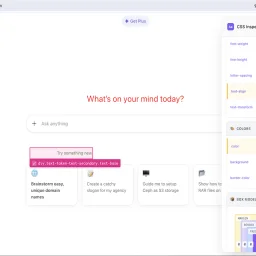
Debugging CSS issues on unfamiliar websites presents a familiar challenge for web developers and designers: how to quickly understand styling structure without struggling through the browser's default developer tools. CSS Inspector Pro addresses this need with a lightweight Chrome extension that layers an intuitive inspection interface over the inspection workflows most developers already use. The extension centers on three core workflows. First, it provides visual element selection through hover highlighting and click-to-select functionality, displaying element dimensions and selector information in real-time. Once an element is selected, developers can edit its CSS properties live with instant visual feedback, supported by color pickers and dropdown suggestions for common values. A granular revert system then allows undoing individual property changes or clearing all modifications at once, with visual indicators showing which properties have been modified. What distinguishes CSS Inspector Pro from existing inspection tools is its focus on immediate usability and simplicity. The interface organizes CSS properties by category—typography, colors, layout—rather than presenting an overwhelming flat list. A dedicated search function filters through computed properties as users type. The extension also includes a box model visualization that dynamically updates with the current element's dimensions, and tabs for viewing organized styles, all properties, or the underlying HTML source. The product appeals to a broad audience: web developers troubleshooting inherited styles on third-party sites, designers experimenting with aesthetic changes before committing to code, and students building foundational CSS understanding. The developer emphasizes privacy as a differentiator—the extension operates entirely locally, requires no signup, and collects no telemetry or usage data. All modifications remain temporary and disappear upon page refresh. The 50-user adoption rate and single five-star review suggest the extension is early in its lifecycle. Version 1.2.2, updated in February 2026, indicates ongoing maintenance. For developers who find themselves frequently inspecting unfamiliar CSS or iterating on styling without touching their editor, the extension offers a faster feedback loop than traditional browser developer tools allow.

Managing vehicle records shouldn't require juggling spreadsheets, receipts, and scattered maintenance notes. Car File addresses this problem directly by consolidating UK vehicle data, service history, and expense tracking into a single application, serving individual drivers, fleet managers, and anyone responsible for multiple vehicles. The product's core strength lies in its integration with the Driver and Vehicle Licensing Agency (DVLA). Rather than manually entering vehicle details, users input a registration number or VIN and retrieve official vehicle information instantly. This removes friction from onboarding and establishes a reliable data foundation. Beyond data retrieval, the app organizes the ongoing responsibilities of vehicle ownership. Users log fuel consumption to track efficiency patterns and identify cost optimization opportunities. Automated alerts notify owners of upcoming MOT tests and insurance renewals—critical compliance dates that are easy to overlook. A service history module consolidates maintenance records, parts, and provider information in one location. Expense tracking enables owners to categorize and report all vehicle-related costs, with built-in report generation for tax purposes and business analysis. The analytics component transforms scattered data into actionable insights. Rather than thinking in isolation about individual expenses, users can identify trends across their fleet and make informed decisions about vehicle usage and maintenance spending. Car File's approach to transparency is notable. The company publicly reports a 99.9% uptime figure and displays a 4.4 out of 5 rating on Trustpilot, with reviews highlighting the reduction in forgotten maintenance tasks and the practical benefits for fleet operators managing multiple vehicles. Pricing is straightforward and tiered. The entry-level Basic plan covers a single vehicle at £69 annually. The Pro tier scales to three vehicles for £149 yearly, while the Premium option unlocks unlimited vehicles for £279 annually. All plans include DVLA integration and core features, though Premium adds advanced analytics, CSV export, priority support, and multi-user family sharing for up to five people. The company offers a 14-day free trial at the Premium level and a 30-day money-back guarantee, reducing adoption friction. The platform succeeds by solving a genuine administrative burden—vehicle management across data retrieval, compliance, maintenance, and costs. Its DVLA integration and structured expense tracking differentiate it from generic note-taking solutions, positioning it as a specialized tool for a specific audience rather than a general-purpose application.