
Pyzit Disposable Email Detector
We built Pyzit to solve the problem of fake signups and bot registrations plaguing online platforms. Our disposable emai...

Jam SQL Studio
A significant shift in the SQL IDE landscape materialized when Microsoft retired Azure Data Studio in February 2026, cre...

DestList DFY Travel Planning System
DestList was built to solve a problem I felt personally: loving travel, but hating how much work planning a trip had bec...
Recently Listed
114 launches
Minimalist design tools have carved out a niche for creators who value speed and clarity over feature sprawl, and Vincent carves out a distinctive position in this landscape. The macOS application is a deliberate throwback to the simplicity of MS Paint, reimagined for contemporary workflows. It targets designers, illustrators, and product teams who need to capture visual ideas quickly without the cognitive load of navigating complex menus or managing countless palettes. The core appeal rests on disciplined restraint. Rather than competing with Photoshop, Figma, or other comprehensive design suites, Vincent strips painting down to essentials: freehand drawing, fill buckets, erasing, and basic selection tools. The interface reflects this philosophy through a spacious, contemporary layout that keeps controls visible without encroaching on canvas real estate. Text tools that sit directly on the canvas allow quick annotations and labels without breaking sketching flow, and the addition of crop, rotate, and tonal adjustments in version 2.0 provides just enough image manipulation for rough asset cleanup. What distinguishes Vincent from other minimalist sketch tools is its deliberate embrace of the MS Paint metaphor. Rather than introducing novel interaction patterns, the application leans into a workflow most designers learned years ago, lowering the barrier to adoption. Someone familiar with basic paint programs can open Vincent and start working immediately. This matters when the goal is capturing ideas before they evaporate. The version history suggests thoughtful iteration. Version 2.0 sharpened the interface and expanded the toolset with text and lightweight edits, addressing the gap between quick sketching and minimal asset refinement. The current 2.1.0 represents continued polish rather than feature creep. At 210.6 megabytes, the application footprint remains lean. The business model relies on direct sales, with a GitHub repository suggesting openness to technical transparency and privacy policy documentation indicating basic compliance standards. For creators who find mainstream design tools bloated and distracting, Vincent offers a focused alternative that prioritizes intention over feature breadth. It is software that gets out of the way and trusts the canvas to be enough.

Team adoption remains one of the most underexploited levers in product-led growth. Most companies build invitation systems from scratch or rely on basic built-in features, missing the opportunity to systematically transform individual trial users into company-wide advocates. Vortex fills this gap with a ready-made invitation engine purpose-built for driving team-level adoption and viral expansion. The product functions as a drop-in replacement for native "add a teammate" or "invite a friend" flows, eliminating engineering overhead while delivering capabilities that would require months to build internally. Rather than a simple invite button, Vortex handles the full lifecycle: multichannel invitations, re-engagement nudges for inviting users, domain-based joining, permission management, role assignments, and built-in safeguards against abuse and compliance violations. This comprehensive scope consolidates what would otherwise demand point solutions across multiple vendors. What distinguishes the product is its focus on measurement and continuous optimization. The platform surfaces early signals of team adoption—the metrics that directly predict churn prevention and conversion acceleration. Beyond standard instrumentation, Vortex incorporates AI-driven A/B testing, allowing teams to systematically improve their invitation experience without manual experiment management. Implementation is frictionless. The SDK ships with pre-built components—the documentation shows a React example deployable in minutes—requiring minimal engineering involvement. This matters for the target market: growth-focused teams without unlimited engineering capacity to dedicate to invitation infrastructure. The company has attracted credible customers. Testimonials reference usage at GitLab and Peaking AI, with customers highlighting both product reliability and responsive support. The positioning resonates with the PLG community's obsession with optimization; Vortex automates the painstaking work of perfecting adoption flows that growth teams would otherwise need to obsess over internally. No pricing information appears on the landing page, suggesting a sales-driven model. For companies betting their growth on rapid team adoption—particularly SaaS businesses with collaborative features or strong network effects—the proposition is straightforward: delegate invitation infrastructure and focus engineering on what drives conversion and retention.
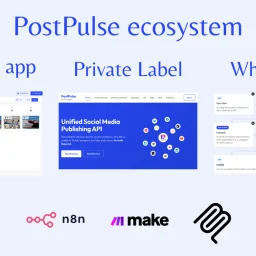
PostPulse is a unified API and integration suite that handles the complexity of social media publishing. Instead of managing individual platform audits and breaking tokens, developers use PostPulse as their outsourced social-connectivity team. Building social integrations manually is a major resource drain: - Complexity: Reading 9+ sets of disparate, often conflicting API documentation. - Audit Hurdles: Passing "Developer App" reviews for Meta, TikTok, and Google (can take months). - Maintenance: Managing token refreshes, rate limits, and constant API version changes. - PostPulse Solution: We handle all of the above. You integrate once; we maintain it forever.

Privacy-conscious individuals and budget-conscious planners now have an alternative to both expensive financial advisors and data-harvesting calculator websites. CalcIQ addresses a genuine tension in financial technology: most free calculators monetize through surveillance, while professional advice remains prohibitively expensive for everyday decisions. This platform sits at the intersection by offering 19 calculators across financial, lifestyle, health, and regional categories without requiring registration or tracking user behavior. The product's core differentiator is genuine privacy protection. Where competitors rely on Google Analytics, Facebook pixels, and third-party data sharing, CalcIQ processes all calculations locally on the user's device and stores nothing remotely. The platform works offline as a progressive web app, making it genuinely inaccessible to any tracking infrastructure. This isn't a marketing claim—users can verify it through network inspection or simply by observing the absence of traditional analytics code. The no-registration approach removes friction while reinforcing the privacy posture. Feature-wise, CalcIQ covers the practical calculators people actually use: loan EMI calculations, systematic investment planning, fixed deposit returns, rent-versus-buy comparisons, and lender comparison tools. The lifestyle category addresses everyday financial implications, like calculating the true cost of daily coffee habits. Regional variants for eight countries including the US, UK, India, Canada, and others incorporate local tax regimes and market data rather than one-size-fits-all assumptions. The ability to embed calculators on external websites through iframe code represents useful flexibility for bloggers and educators. The free tier allows three daily calculations on financial tools, creating a reasonable conversion incentive toward paid tiers without making core functionality unusable. The Pro subscription costs $9.99 monthly or $79 annually, positioning itself as a minor expense relative to hourly financial advisor fees or monthly planning software subscriptions. Pro users gain unlimited calculations and watermark-free PDF reports suitable for sharing with actual advisors or lenders. The business model reflects the privacy positioning: instead of monetizing data, the company captures willingness-to-pay from users seeking professional-grade analysis without surveillance. This alignment between product values and revenue mechanism is increasingly rare in fintech. The platform's limitations aren't detailed here, but the core offering—straightforward, private financial calculations with regional customization—solves a real problem for people tired of being data products themselves.

AI-Powered Data Visualization Without the Code Nveil is a no-code AI platform built for researchers and analysts to extract meaning from complex data fast. The workflow is simple: upload your file, describe what you want in plain language, and receive production-ready charts or maps in seconds. Unlike tools prone to AI "hallucinations," Nveil uses a proprietary engine called Choregraph™. It relies on deterministic, math-based processing rather than generative models. This ensures every result is verifiable, reproducible, and fully traceable—a requirement for scientific research and regulated industries. Key Highlights: Versatile: 30+ chart types, including heatmaps, 3D surfaces, and Sankey flows. Privacy: Your data is never used to train its models. Flexible: Supports CSV, Excel, and JSON in English and French. Nveil bridges the gap between raw spreadsheets and professional insights. It’s browser-based, offers a free tier, and provides fast, trustworthy results.

Developers building modern web interfaces have long struggled with the tension between speed and design quality—shipping fast often means compromising on polish, while chasing perfection drains project timelines. UI-Layouts addresses this directly by packaging over 100 production-ready components and design blocks into a unified library, eliminating the need to build interfaces from scratch or stitch together disconnected tools. The product targets frontend developers and design-focused teams who want to accelerate their workflow without settling for generic, off-the-shelf aesthetics. Rather than a collection of dry utility components, the platform distinguishes itself through an emphasis on visual sophistication. User feedback consistently highlights the cleanliness and aesthetic rigor of the design work—commenters specifically praise the minimalist approach and the quality of its 3D effects, suggesting the library succeeds in making production components that don't look like they came from a template. What sets UI-Layouts apart is its positioning as a comprehensive frontend ecosystem. The platform bundles components, interactive effects, design utilities, and copy-paste blocks under one roof, reducing the friction of hunting across multiple libraries. The premium tier offers a separate selection of blocks that appear designed for developers who need higher-end design assets without customization effort. This modular approach lets developers validate the concept before committing financially. The library has cultivated genuine enthusiasm within its user base, with commenters regularly describing the work as exceptional. One reviewer noted the platform "nails that balance between speed and polish," which captures the core value proposition. Another praised it as "a treasure trove" for its aesthetic and design quality. The community endorsements suggest the product has successfully positioned itself as more than just functional—it delivers on visual quality that developers actually want to use. The platform's open-source commitment has also resonated with its community. For teams looking to eliminate repetitive component design work while maintaining visual quality and modern aesthetics, UI-Layouts offers a practical shortcut. The product succeeds because it acknowledges that developers want both velocity and beauty—not one at the expense of the other.
Smartwatch-enabled breathing exercises address a growing demand for accessible stress management tools that work beyond the phone. Vayu targets health-conscious users seeking nervous system regulation through guided breathwork, appealing particularly to those already wearing wearables and looking to minimize screen time during wellness practices. The standout element is the implementation of haptic feedback on the wrist, which guides breathing patterns without requiring users to glance at a display. This design choice aligns with broader wellness trends favoring low-friction, ambient guidance rather than app-centric interaction. The app supports multiple smartwatch ecosystems—Apple Watch, Pixel Watch, and Galaxy Watch—removing ecosystem lock-in concerns and broadening its addressable market. The product combines Western breathing patterns with techniques drawn from pranayama traditions such as Bhastrika and Kapalbhati. Sessions accommodate various use cases: quick resets, structured decompression, and expertly designed sessions timed for different parts of the day. The free tier provides immediate access to fundamental breathing exercises, while the paid plan unlocks advanced techniques and analytics features. Real-time heart rate variability biofeedback differentiates it from generic breathing apps by linking subjective practice to measurable physiological data. User traction signals are notable. The app holds a 4.8-star rating across stores, maintains 64% retention after 30 days—a figure higher than many comparable wellness apps—and ranks among top health and fitness applications in over 15 countries. A 199-person pilot study documented a 28.6% median increase in HRV and a 7.4 beat-per-minute reduction in resting heart rate, lending credibility to its efficacy claims. The pricing model operates on a freemium structure with a seven-day trial before requiring subscription. The Pro plan costs either five dollars monthly or sixty dollars annually. The annual pricing represents a 44% discount relative to monthly payments, incentivizing longer-term commitment. This tiering allows entry without friction while capturing revenue from engaged users. Vayu positions itself at the intersection of ancient breathing practices and contemporary wearable technology. Its execution—particularly the focus on wrist-based haptic guidance and physiological feedback—demonstrates thoughtful product design rather than a generic wellness app repackaged for smartwatches.

We built Timeco to solve the time tracking pain for field and office teams. Managing distributed workforces and ensuring accurate payroll across multiple locations was unnecessarily complex. Now teams can clock in and out seamlessly, track hours in real time, and get paid accurately without the administrative overhead.

Breaking down language barriers during real-time conversations has long been a friction point for globally distributed teams, and Audilate directly addresses this challenge. The platform combines AI-powered speech transcription with simultaneous translation across over 100 languages, making it a practical solution for organizations where meetings, interviews, and collaborative discussions frequently span multiple geographies and language groups. The core value proposition centers on eliminating the lag and complexity that typically come with asynchronous translation workflows. Rather than recording conversations and processing them after the fact, Audilate delivers live transcription and translation, allowing participants to collaborate without stopping to manage language gaps. This is particularly relevant for companies hiring internationally, conducting cross-border partnerships, or operating distributed teams where English is not universally spoken as a first language. What distinguishes the product is its breadth of language support. With coverage across 100+ languages, the platform moves beyond serving just major language pairs and opens functionality to teams working in less commonly supported languages. This scope suggests the founders recognize that global collaboration extends well beyond English-to-Spanish or English-to-Mandarin scenarios. The integration of transcription and translation in a single workflow is also noteworthy—separate tools for these functions create unnecessary switching costs and synchronization challenges. The positioning emphasizes real-time processing, which is critical for the use cases mentioned. Whether facilitating a live meeting between team members in different countries, conducting remote interviews with international candidates, or enabling seamless cross-border conversations, the speed at which transcription and translation occur directly impacts usability. Delays of even a few seconds can derail natural conversation flow. The product targets organizations serious about global teamwork, particularly those for whom language support has become a competitive advantage or operational necessity. This includes multinational corporations, international service providers, distributed startups, and any team conducting work across language boundaries on a regular basis. The emphasis on meetings and interviews suggests the founders see their strongest initial adoption among HR, engineering, and business development functions that routinely conduct cross-language conversations. One practical consideration for potential users is how the platform integrates with existing communication infrastructure—meetings apps, video conferencing tools, and collaboration platforms—though those implementation details fall outside the scope of what's presented here. The foundational premise, however, is sound: removing language as a barrier to real-time collaboration remains a genuine problem for many organizations.

Orchestrating AI across multiple devices remains a friction point for knowledge workers juggling web browsers, desktops, and mobile workflows. BlackEagle AI Control Center positions itself as a unified command center for this fragmented landscape, offering a four-part ecosystem spanning web, desktop, browser extension, and Android applications. The core proposition is direct: issue a command once and let every connected endpoint collaborate to deliver results. The product's architecture reflects a pragmatic grasp of distributed work. The browser extension handles web automation and data collection with human-like interactions—automating form fills, scraping content, and parsing web pages. The desktop client processes private files and executes complex tasks requiring local computing power. The Android application bridges mobile workflows, capturing documents and executing remote operations. A centralized web interface orchestrates everything, providing command and visibility across all connected devices simultaneously. What distinguishes BlackEagle from simpler automation tools is its emphasis on true multi-endpoint collaboration rather than isolated task execution. Connected devices operate as a coordinated team rather than independent agents. A research task can simultaneously gather web data via the browser extension, process documents locally on desktop, and capture mobile evidence via Android—all orchestrated from a single dashboard. This capability addresses a genuine gap: most automation platforms force workflow decomposition across tools. The product also privileges privacy through local-first processing and hardware-backed encryption. This resonates with users handling sensitive data or operating in regulated environments where cloud-only solutions create compliance friction. The desktop client's emphasis on private file handling and the Android client's on-device processing reinforce this stance. The company demonstrates conviction through educational content addressing concrete workflows: automation tutorials, content curation strategies, and integration pathways with productivity platforms like Notion. This signals confidence in adoption beyond early adopters. The public materials do not disclose pricing, subscription tiers, or trial availability, which limits assessment of market positioning. The absence of user counts, deployment statistics, or customer case studies leaves the value proposition somewhat aspirational—the capability is clearly scoped, but evidence of operational scale remains opaque. For teams managing sensitive information across heterogeneous devices or executing automation-intensive workflows spanning web and local environments, BlackEagle offers a substantive alternative to tool fragmentation. Whether multi-device synergy translates into seamless operation hinges on execution depth, a dimension the public presentation does not fully expose.

Every creator knows the struggle: the video is finally finished, but the hardest part is just beginning—the thumbnail. Up until now, you really only had two choices: spend hundreds of dollars on professional designers or waste hours of your own time wrestling with complex software, only to end up with a result that doesn't get the clicks it deserves. Why we built ThumbNew: We believe that high-quality design shouldn't be a privilege reserved for massive channels with huge budgets. ThumbNew was created to solve "thumbnail paralysis." We wanted to bridge the gap between expensive design agencies and the time-consuming DIY approach. The Solution: ThumbNew turns hours of design work into a 30-second workflow. Our AI-driven platform puts professional design expertise directly into your hands, giving you high-CTR thumbnails instantly so you can get back to what matters most—creating content. Why this works: The Problem: It highlights the "Pain Points" (high costs and lost time). The Solution: It positions ThumbNew as the hero that saves both money and time. The Hook: Mentioning "30 seconds" is a powerful selling point for busy creators.
Navigating Hacker News at scale presents a familiar problem for tech professionals and startup founders: the platform's prolific stream of posts makes it genuinely difficult to identify valuable stories amid inevitable noise. HackLens addresses this directly by providing a curated, streamlined interface to the same content, stripping away HN's characteristically sparse design in favor of a cleaner reading experience optimized for both discovery and sustained focus. Built by Berranova, an independent software company, HackLens targets the technical audience already invested in Hacker News but frustrated by the platform's inherent limitations. The product doesn't attempt to replace HN—it enhances it, pulling content directly from the source while adding organizational features HN itself deliberately avoids. The standout capabilities center on discovery and personalization at scale. A robust search function allows users to instantly locate specific stories, comments, and user profiles rather than scrolling through endless chronological feeds. Topic notifications represent the most significant quality-of-life improvement, alerting users when new stories match their interests rather than requiring them to actively monitor feeds. Cross-device synchronization ensures reading preferences and saved stories stay consistent whether users switch between desktops, tablets, or phones. The interface itself reflects intentional design philosophy. A minimal aesthetic keeps content central—no sidebar clutter or visual distractions. Dark mode support acknowledges that HN's core audience often reads during irregular hours and values eye comfort. Throughout, the emphasis lands on clarity and speed, recognizing that technical professionals measure interface overhead in lost productivity. Beyond the core feature set, HackLens positions itself carefully within the ecosystem. The site explicitly states it sources content from Hacker News and disclaims any affiliation with Y Combinator, avoiding confusion about institutional relationships. A straightforward support email provides a direct path for user feedback, suggesting the team remains committed to iteration. No pricing model appears on the public site, leaving the business structure unclear. For engineers and tech professionals already deeply invested in Hacker News, HackLens offers genuine ergonomic improvements over the source platform. It occupies a practical niche: not essential for casual readers, but meaningfully more usable for a specific audience with well-defined information management pain points.

The fundamental tension between software creators and users over pricing finds an unconventional answer in this digital product marketplace. By letting customers set their own price for any software download, the platform directly addresses a persistent frustration: the climbing cost of digital tools that regularly exceed $50, $100, or more per license. Gizzapp targets anyone priced out of traditional software markets—freelancers on tight budgets, students, small business owners, and privacy-conscious users who want tools without premium pricing barriers. The model itself is the primary differentiator. Rather than fixed pricing tiers or subscription models, purchasers name their own price at checkout, creating a direct relationship between perceived value and actual payment. The current catalog emphasizes security and privacy tools alongside practical utilities. Encryption software like CipherVault offers military-grade AES-GCM protection for sensitive files. IP masking tools and proxy finders help users manage their digital footprint. Email management solutions address list cleaning and deduplication. Video and audio conversion tools round out the technical capabilities, while WordPress plugins and SEO utilities serve the website-building audience. YouTube downloading functionality is also available. The breadth of categories—spanning encryption, downloaders, email tools, proxy checkers, and conversion software—positions the marketplace as a generalist store rather than a niche-focused platform. This diversity appeals to users seeking a single destination for varied software needs, though the wide range of products raises questions about curation and quality consistency across different categories. The "pay what you want" model creates inherent tension. For customers, it's liberating: users might download premium tools for minimal cost or freely evaluate software before deciding its worth. For creators, the model depends entirely on customer goodwill and honesty. The platform mentions donations for some products, signaling that voluntary contributions likely won't sustain all offerings indefinitely. Whether this pricing approach achieves sustainable scale remains uncertain, but the concept challenges conventional software distribution by prioritizing accessibility over profit margin—a positioning that fundamentally reorders expectations around what digital tools should cost.

Finding qualified leads remains a significant bottleneck in B2B sales, with teams traditionally drowning in boolean searches and manual research that consumes hours without guarantees of quality prospects. SalesOS tackles this problem by automating the entire discovery process, allowing sales teams to describe their ideal customer profile in natural language and receive ranked, enriched leads within minutes. The platform's core strength lies in its approach to qualification. Rather than overwhelming users with complex filtering options, it leverages AI to score prospects against custom ICPs and surfaces the most likely-to-convert candidates first. The claim of delivering a first lead in under two minutes reflects a genuine efficiency gain for teams accustomed to days-long prospecting cycles. The AI-driven matching reportedly achieves an 85 percent accuracy rate against ideal customer profiles, a measurable validation of its targeting capability. Beyond prospecting, SalesOS extends into the broader sales workflow. Its AI email generation feature personalizes outreach based on prospect profile data, job title, and company information, supporting the 2-4x higher reply rate claim mentioned in the marketing materials. The platform also includes lead scoring automation, smart meeting scheduling, pipeline visibility with forecasting tools, and real-time coaching for objection handling during calls. A workflow builder allows teams to construct automated follow-up sequences without requiring code, reducing friction for non-technical users. The pricing model reflects a credit-based approach layered with subscription tiers. The free plan provides dashboard access with sample data. Paid plans start at thirty-nine dollars monthly for four hundred prospects with email data, scaling to one hundred seventy-nine dollars monthly for three thousand prospects and unlimited sequences. Credits are consumed when revealing contact details—one credit per email, five per phone number—while searching and filtering remain free. This structure creates natural monetization around data access while allowing exploration without friction. The three-times faster prospecting claim, while valuable, would benefit from independent substantiation. For B2B sales teams struggling with traditional lead generation methods and seeking to accelerate their discovery process, SalesOS presents a credible alternative that combines automation with intelligence. The platform's design prioritizes speed and ease of use over customization complexity, making it most relevant for teams prioritizing velocity in lead finding over granular control.
Keeping a Mac organized requires either constant manual effort or technical prowess. FileMason aims to solve this by automating file organization through a visual, code-free interface. The tool targets macOS users who accumulate files across their systems but lack the inclination or skill to script custom solutions. The product distinguishes itself through a visual rule builder that lets users define file organization logic without writing code. Users select conditions and actions from dropdown menus, then apply them automatically to their file system. Real-time monitoring means new files are sorted according to rules as soon as they appear, eliminating the need for manual intervention. What sets FileMason apart is its priority system. Rules can be reordered by dragging, and the first matching rule wins, giving users fine-grained control over how files get processed. This prevents conflicts and allows for layered organization logic. The application includes smart tracking that processes each file only once, avoiding the duplicate operations that plague less thoughtful automation tools. FileMason offers eleven pre-built templates for common scenarios like organizing screenshots, PDFs, photos, music, and documents. Users can build custom rules by choosing from fourteen condition types based on filename, extension, file type, size, creation date, modification date, and Finder tags, combined with nine action types covering move, copy, rename, tag, compress, and delete operations. The renaming functionality supports variables like {name}, {date}, {year}, {month}, and {counter}, enabling dynamic naming schemes. Beyond automation, the application includes full undo history, allowing users to reverse any operation with a single click. A menu bar widget provides quick access without opening the main window. Language support extends to six languages: English, Spanish, German, French, Japanese, and Chinese. The tool requires macOS 13.0 or later and is distributed through the Mac App Store. Specific pricing details aren't disclosed in available materials, though its App Store distribution positions it as a consumer-facing application. For Mac users frustrated with file clutter but uncomfortable with terminal-based automation, FileMason delivers a practical middle ground between manual organization and scripting.
Endless arcade racing meets action-packed combat in this mobile experience that rewards split-second reflexes and chain-kill combos. Doodle Road Fury targets casual gamers who want bite-sized sessions of high-intensity gameplay without narrative bloat, blending familiar racing mechanics with unexpected combat depth. The core appeal lies in procedural generation that ensures no two runs feel identical. Rather than predetermined tracks, the game constructs infinite roads that progressively intensify through tighter curves, denser traffic, and escalating speed. This system sidesteps the stale repetition that often plagues mobile racers, though it places all tension on moment-to-moment reaction over strategic route planning.

Finding reliable childcare quickly remains one of the most painful problems parents face. BabyKeeper's solution is radical in its simplicity: connect with a vetted babysitter in one click. The French-based platform targets the underserved market of parents seeking casual childcare without friction, positioning speed and trust as its primary differentiators. The tagline's emphasis on "confiance" (trust) signals that the founders understand a fundamental market truth: parents won't use a babysitter platform unless they believe the vetting is rigorous. This focus distinguishes the service from bulletin boards or classified sites where anyone can post. By building trust verification into the core product promise rather than burying it in terms of service, BabyKeeper stakes its reputation on the quality of its screening process. The one-click connection model appeals to time-poor families. Rather than sifting through profiles, communicating with multiple candidates, and managing complex logistics, parents can move from need to booked sitter in moments. This simplicity benefits babysitters too by putting them directly in front of customers without requiring them to build personal brands or manage their own marketing. The timing and geography of BabyKeeper's launch reflect a real market opportunity. Childcare hiring in Europe has been fragmented across word-of-mouth networks, nanny agencies, and informal classifieds. Digital platforms have revolutionized every consumer service sector—from transportation to dining—yet babysitter hiring stubbornly resists disruption. Mobile penetration across Europe, combined with rising childcare costs pushing parents toward flexible alternatives, creates ideal conditions for a well-executed platform. The French domain and language reflect positioning in France and broader European markets. This localization strategy matters: childcare regulations, employment law, and cultural expectations around vetting vary significantly across countries. Babysitting in Paris operates under different rules than in Berlin or London, giving a Europe-first platform potential advantages over US-centric competitors. The website provides minimal detail about pricing, team backgrounds, or verification methodology. Without knowing whether vetting involves background checks, reference verification, or community ratings, it's impossible to evaluate whether BabyKeeper delivers on its trust promise or merely claims it. In a market where safety is paramount, execution details matter as much as positioning.

As AI shopping agents become mainstream, e-commerce stores face a new operational requirement: compatibility with systems like ChatGPT, Gemini, and Perplexity that browse and purchase independently. The Universal Commerce Protocol (UCP) provides the technical standard for this integration, but implementing it correctly poses a challenge for merchants across different platforms. UCPtools addresses this gap by offering a free validation platform that quickly assesses whether a store meets the standard and identifies specific remediation steps. The service validates compliance against both UCP and ACP standards co-developed by Google, Shopify, Etsy, Wayfair, Target, and Walmart, with endorsements from 25+ organizations including Stripe and PayPal. This consortium backing lends credibility to the standards themselves. The tool operates independently of these organizations—a positioning that increases merchant trust by distancing it from vendor interests. What distinguishes UCPtools from a basic compliance checker is its emphasis on actionable diagnostics. Rather than returning a simple pass/fail score, it provides an AI Readiness Score scaled 0-100 that breaks down performance across four dimensions: whether AI agents can discover the store, whether they can complete checkout, what payment methods the store supports, and security measures like signing keys and HTTPS encryption. This granular approach guides merchants toward specific fixes rather than leaving them with abstract compliance gaps. The tool supports multiple major platforms—Shopify, WooCommerce, BigCommerce, and Magento—with platform-specific implementation guides. Shopify merchants benefit from native UCP integration through the Shop app, while others are directed to manual setup or third-party solutions. The core service returns results in 30 seconds at no cost, removing financial friction from adoption. The broader context makes the timing relevant. With AI shopping agents now functional and operational, store visibility to these systems has shifted from experimental feature to pragmatic business necessity. A merchant's absence from AI-powered purchasing channels represents a form of digital invisibility that UCPtools helps rectify. The tool's free-forever model and technical precision position it as foundational infrastructure for the emerging AI commerce ecosystem rather than a premium advisory service.

Building in public has become a defining trend among indie makers, but most lack an organized way to involve their community in product decisions. IndieRoadmaps addresses this gap by providing a dedicated platform where solo founders and small teams can publish their product roadmaps, collect feature requests through voting, and gather feedback from a community of people genuinely invested in their success. The platform targets indie hackers explicitly, recognizing that this audience operates differently from venture-backed startups. They're building for themselves first, iterating quickly, and often making decisions based on direct community input rather than internal product roadmaps. By centralizing roadmaps in one place, IndieRoadmaps creates a discoverable ecosystem where makers can showcase their direction and potential users can find products aligned with their needs. What distinguishes IndieRoadmaps is its focus on the indie maker community as both its audience and its value proposition. The site showcases successful indie products across multiple categories—everything from AI tools and productivity software to developer tools and design apps. This curatorial approach positions IndieRoadmaps not just as a feature-tracking tool but as a community hub. The voting mechanism lets users express genuine demand for features, providing founders with real-time market validation before investing engineering resources. The platform itself practices what it preaches. IndieRoadmaps runs its own public roadmap on the site, allowing users to see upcoming features like multiple roadmaps per user, public roadmap pages, and Google OAuth integration. This transparency about their own development reinforces the building-in-public philosophy they're promoting. The feature set remains straightforward and focused. Users can create roadmaps, collect votes on planned features, enable community comments, and sign in via Google. There's no mention of advanced collaboration features, custom branding, or enterprise pricing tiers—suggesting the product is designed for individual makers rather than larger organizations. This clarity of purpose is a strength, not a limitation. For indie makers seeking validation and community engagement before launch, IndieRoadmaps provides a purpose-built solution embedded within a supportive ecosystem of peers. It's a platform that understands its audience's workflows and philosophy, built by people navigating the same challenges.

Keeping pace with artificial intelligence developments has become a legitimate challenge for developers, business leaders, and curious technologists alike. The sheer volume of breakthroughs, research papers, and incremental improvements across the AI ecosystem makes it nearly impossible for individuals to separate signal from noise without dedicating significant time to curation. AIApplePie addresses this head-on by functioning as a community-driven aggregator that consolidates the latest AI advancements into a digestible format, positioning itself as essential infrastructure for anyone needing to stay current in a rapidly evolving field. The platform's core strength lies in its recognition that understanding AI developments requires more than raw information—it demands context and perspective. Rather than simply collecting headlines, AIApplePie empowers its community to contribute authentic analysis and interpretation, transforming passive consumption into collaborative learning. This approach distinguishes it from generic news feeds by introducing human judgment into the curation process, ensuring that featured content carries genuine insight about what developments matter and why. The target audience spans technical professionals seeking comprehensive AI coverage, decision-makers evaluating AI's relevance to their organizations, and enthusiasts who want to move beyond surface-level understanding of the field's trajectory. For this group, AIApplePie serves as both a time-saving tool and a community hub where conversations around emerging technologies can flourish. What emerges from the platform's philosophy is a recognition of a real gap in how AI information reaches people. Rather than competing with individual sources like ArXiv or major tech publications, AIApplePie occupies a unique middle ground—it's neither an academic repository nor a mainstream news outlet, but instead a practical gathering place where shared curation creates value. Community members collectively decide what's worth discussing, and this distributed intelligence model creates a self-correcting system that responds to genuine interests rather than editorial biases. The service demonstrates clear product-market fit with its audience: people overwhelmed by AI's pace of change who want both broad coverage and trusted opinions. By making discovery social and contextualized rather than algorithmic, AIApplePie transforms information overload into community-driven clarity.